
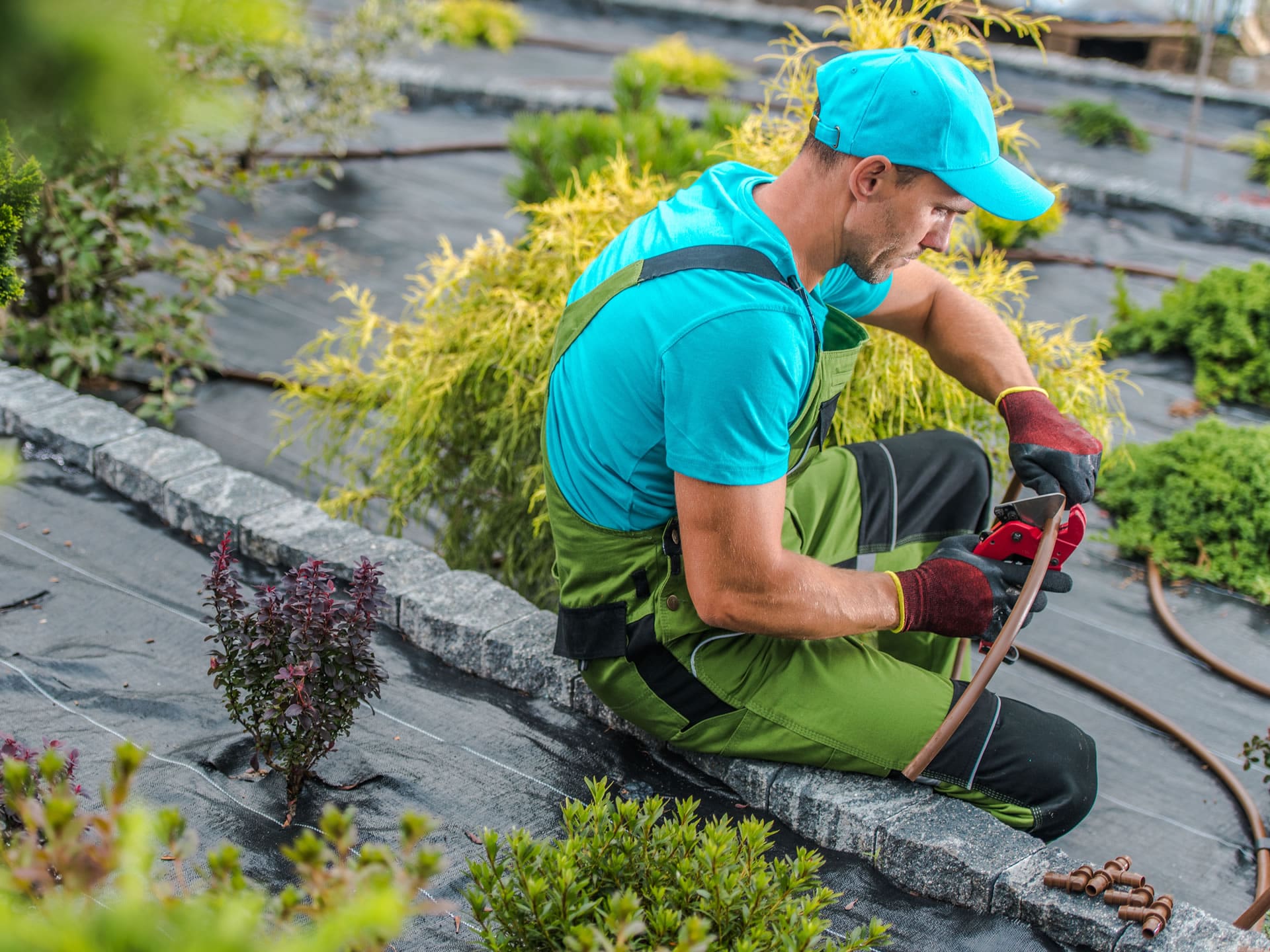
Water is vital to plant health, but watering by hand can be a hassle. You have to drag hoses between gardens, move sprinklers around, or take the time to water each plant. Our irrigation systems take the hassle out of watering. They’re the easiest way to give plants the consistent moisture they need for your biggest harvest and most beautiful blooms. Here’s why:
- You install them once and leave them in place all season long.
- Turn on the spigot to water plants; no hoses or sprinklers to move around.
- Customizable systems save water by watering plants, not paths.
- If you add a timer, your garden will water itself!
Drip Irrigation
Drip irrigation systems are usually the best choice for watering a landscaped bed with trees, shrubs and perennials, because they give you perfect control over how much water each plant gets. You can select emitters that give a lot of water to plants, or ones that give just a small drink. There are even mini sprayers available for drip systems which can water sections of the landscape with annual flowers, vegetable seedlings and other thirsty plants. Because you can mix and match which emitters you use, your drip system can be customized to your landscape’s needs.
Sprinkler system
Lawn sprinkler systems are the traditional go-to for landscape irrigation. Sprinklers are great when you have a large swath of plants of the same sort. Thus, sprinklers are great to use on grassy lawns.
During the summer, it’s best to use sprinkler systems either early in the morning or later in the evening, close to sunset. When you use a sprinkler in the middle of the day, much of your water is liable to evaporate and you could inadvertently scorch your grass.
The optimal time to water with a sprinkler is in the evening. The water will have all night to soak down to reach the roots, and there will be less evaporation. You can set up a timer for your lawn sprinkler system to make sure it goes on at the best times during the day.
An experienced irrigation system contractor can help you place sprinkler heads right where you need them to make sure your lawn receives the perfect amount of water, and also ensure that the sprinkler heads are out of the way.
Rainwater Harvesting
An alternative to water wells and city water systems is rainwater harvesting. You collect rainwater in barrels or large underground cisterns and use it to water the yard. The trick to rainwater harvesting is to prevent evaporation by maintaining a closed system. Large above-ground ornamental cisterns have been used for centuries for garden irrigation as well as a drinking supply. Harvesting rainwater is practical where water is at a premium and it’s not possible to run electricity to the area that needs watering. Hoses can be attached at the spigot or output device and directed where needed.